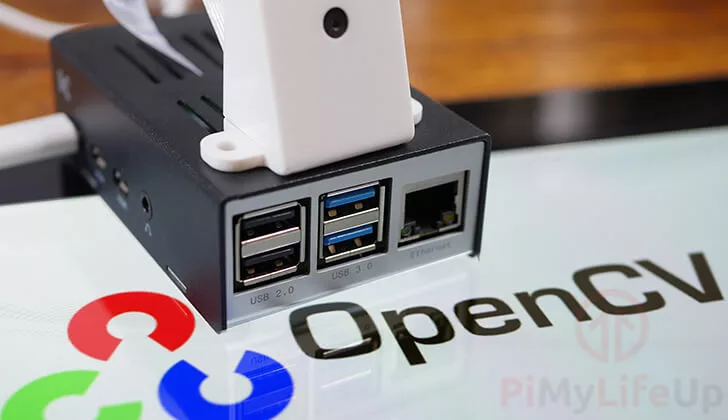
From Classroom to Factory: Mastering Edge AI with Raspberry Pi & OpenCV
As the Kingdom enters the 2025-2026 academic year, a historic shift is taking place in our classrooms. The Ministry of Education and SDAIA have officially rolled out the new national AI curriculum. This move places Artificial Intelligence and IoT right at the center of Saudi education.
However, a big question remains for students at KFUPM, trainees at TVTC, and engineers in Jubail. How do they translate code into reality? The answer lies in two powerful and accessible tools: The Raspberry Pi and OpenCV. This guide bridges the gap between academic theory and real-world Industrial IoT (IIoT) applications. It empowers the next generation of Saudi innovators to build the "Made in Saudi" smart systems of the future.
Why Raspberry Pi + OpenCV is the Standard for KSA Learning
In the context of Vision 2030's Human Capability Development Program, expensive proprietary hardware can be a barrier. The Raspberry Pi ecosystem breaks down this wall.
- Cost-Effective Prototyping: A Raspberry Pi 5 costs a fraction of an industrial PLC. Yet, it can run complex Python scripts for computer vision.
- Open Source Power: OpenCV (Open Source Computer Vision Library) allows developers to build systems that can "see" without paying for expensive software licenses. You can detect defects, read license plates, or monitor safety with free code.
- Edge Computing Ready: It processes data locally. In a country with vast remote areas like Al-Ula or the Empty Quarter, sending video streams to the cloud is impractical. Raspberry Pi does the thinking directly on the device.
The Tech Stack: What You Need to Get Started
To build an industrial-grade vision system, you need the right hardware. Here is the standard "Saudi Maker" starter pack available at IIoT-Bay:
1. Compute Module
Raspberry Pi 5 (8GB RAM): This is essential for running heavy OpenCV models without lag. Its enhanced thermal management is perfect for our warmer climate.
2. The "Eye" (Camera Module)
Raspberry Pi Global Shutter Camera: Unlike standard cameras, global shutter captures fast-moving objects without distortion. This is critical for products moving on a conveyor belt.
3. Industrial Hardening
DIN-Rail Mount Cases & Heatsinks: You cannot leave a bare board exposed in a factory. Proper industrial enclosures protect the Pi from dust and static.
Project Idea 1: Automatic Date Fruit Sorting (Quality Control)
Let's apply this to a local industry. Saudi Arabia is a top global exporter of dates. Traditionally, sorting by size and quality is a manual process.
The Solution: A Raspberry Pi running OpenCV.
- Input: Camera feed of dates on a belt.
- Processing: OpenCV uses color thresholding (HSV) to detect skin separation or size.
- Output: The Pi's GPIO pins trigger a pneumatic arm to push "Grade B" dates into a separate bin.
- IIoT Connection: The count of Grade A vs. Grade B is sent via MQTT to a central dashboard for the farm manager.
Project Idea 2: PPE Compliance Monitor (Safety)
Safety is paramount in NEOM construction sites. Ensuring workers wear helmets and vests is a legal requirement.
The Solution: An Edge AI Safety Cam.
- Object Detection: Train a simple YOLO (You Only Look Once) model to recognize "Helmet" and "No Helmet".
- Real-Time Alert: If "No Helmet" is detected for more than 5 seconds, the Raspberry Pi activates a local siren and logs the incident time to the cloud.
- Privacy: By processing video locally, no faces are recorded. This helps comply with data privacy regulations.
Integration with TVTC & University Curriculums
For educators at King Saud University (KSU) or Technical and Vocational Training Corporation (TVTC), integrating these tools prepares students for the job market.
Capstone Project Value
Students who graduate with a portfolio containing a working IIoT prototype are in high demand. For example, a student who builds a "Smart Traffic Counter for Riyadh Streets" is 3x more likely to be hired by top defense and industrial firms than those with only theoretical knowledge.
The Skills Gap
The industry doesn't just need coders. It needs System Integrators. These are people who know how to wire a sensor, write the Python script, and secure the network. This hardware stack teaches all three skills simultaneously.
Challenges: From Lab to Real World
Heat Management
Running Computer Vision algorithms pushes the CPU to 100%. In a non-AC environment, a Raspberry Pi will throttle. Active cooling solutions are mandatory for Saudi deployments.
Lighting Consistency
OpenCV struggles with shadows. Industrial machine vision requires controlled lighting, such as Ring Lights, to ensure the camera sees the same thing day and night.
The Future: TinyML and The Saudi Cloud
The next step is TinyML. This involves running stripped-down AI models on microcontrollers like the Raspberry Pi Pico. It allows for battery-powered sensors that can detect vibration anomalies or voice commands without internet connectivity.
Furthermore, local cloud providers like stc cloud are offering MQTT brokers specifically for Saudi IIoT data. This ensures full compliance with data sovereignty laws.
Getting Started: Your Educational Partner
Whether you are a student building your senior design project or a professor designing a new lab for 2026, you need reliable hardware.
Step 1: Get the Gear
Don't wait for international shipping. Source your Raspberry Pi kits locally to ensure warranty and support.
Step 2: Join the Community
Engage with local groups like the Riyadh FabLab or university robotics clubs. Sharing code and solving challenges together is the best way to learn.
Conclusion: Empowering the Digital Generation
The distance between a student's laptop and a smart factory floor has never been shorter. By mastering OpenCV and Raspberry Pi, Saudi youth are not just learning to code. They are learning to build the infrastructure of Vision 2030.
The tools are in your hands. The curriculum is in your schools. Now, it is time to build.
Start Your AI Journey Today
Looking for the latest Raspberry Pi 5 kits, Camera Modules, or Industrial Hats? Visit IIoT-Bay Education Store for special academic discounts and bulk orders for universities and training centers.
Frequently Asked Questions
ESP32 vs Raspberry Pi: Which is better for industrial IoT in Saudi Arabia?
ESP32 is ideal for distributed sensors and battery-powered applications due to low power consumption. Raspberry Pi suits edge computing, data aggregation, and applications requiring more processing power. Many Saudi projects use both in complementary roles.
Can IoT devices withstand Saudi Arabia's harsh industrial environment?
Yes, with proper enclosures rated for high temperatures (50°C+), dust ingress (IP65 or higher), and industrial-grade components. Commercial IoT devices often fail without these protections.