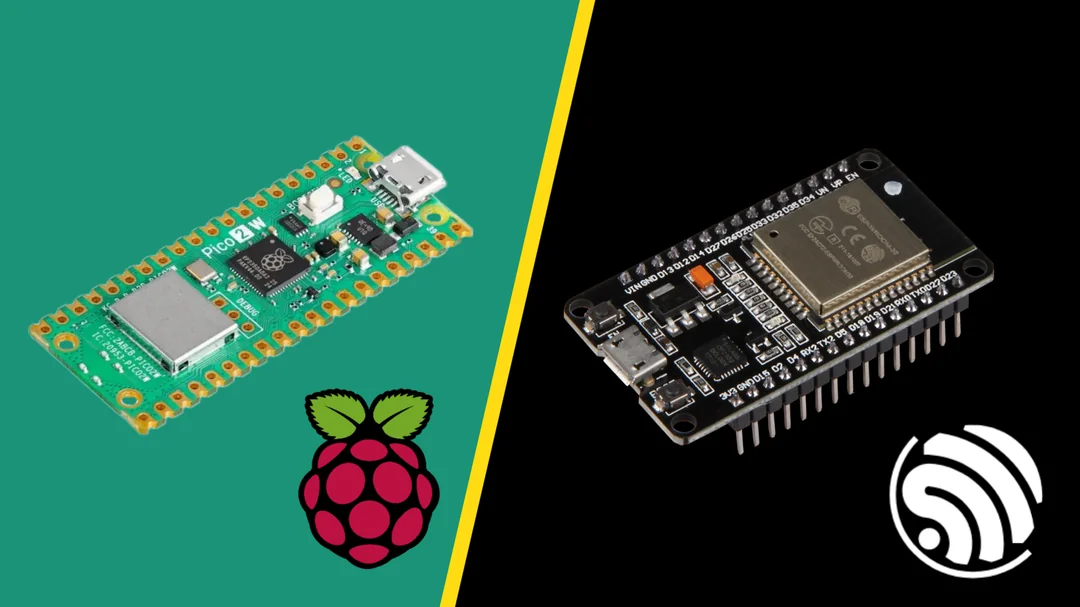
The Great Debate: Microcontroller vs. Single Board Computer in KSA
In the bustling tech hubs of Riyadh and the industrial zones of Yanbu, engineers face a common dilemma. When building a new smart system, which brain should you choose? The market offers two primary contenders. On one side is the Raspberry Pi, a fully functional computer. On the other is the ESP32, a low-cost and power-efficient microcontroller.
This is not just a technical choice. It is a strategic business decision. Choosing the wrong hardware can lead to overheated devices in the Saudi summer or batteries running dead in remote locations. This guide breaks down the differences between these two giants and helps you decide which one fits your Vision 2030 project goals.
Understanding the Contenders
The Raspberry Pi (The Heavy Lifter)
Think of the Raspberry Pi as a miniature desktop PC. It runs a full Operating System like Linux. It has gigabytes of RAM and connects to a monitor. In the context of Industrial IoT (IIoT), it is used as an "Edge Gateway." It collects data from other sensors, processes it locally, and sends organized reports to the cloud.
The ESP32 (The Efficient Worker)
The ESP32 is a microcontroller. It does not run an OS like Windows or Linux. Instead, it runs a single program in a loop. It is incredibly energy-efficient, cheap, and comes with built-in Wi-Fi and Bluetooth. It is designed to wake up, read a sensor, send the data, and go back to sleep.
Round 1: Power Consumption and Solar Viability
In Saudi Arabia, solar power is king. We have vast desert regions where running power cables is impossible. This is where the ESP32 shines.
- ESP32: It consumes micro-amps in deep sleep. You can run an ESP32 weather station on a small solar panel and a rechargeable battery for years without maintenance.
- Raspberry Pi: It is power-hungry. It requires a stable 5V power supply and consumes significant current even when idle. Running a Pi on solar power requires large, expensive panels and heavy batteries.
Winner for Remote Sites: ESP32.
Round 2: Processing Power and AI
If your project involves "seeing" or "hearing," raw power matters. Projects in NEOM often require cameras to detect safety violations or traffic flow.
- Raspberry Pi 5: It can process video streams in real-time. It can run Python scripts, database servers, and complex AI models using TensorFlow Lite.
- ESP32: It can handle very basic image capture, but it struggles with video processing. It is better suited for simple data points like temperature, vibration, or humidity.
Winner for Edge AI: Raspberry Pi.
Round 3: Industrial Hardening and Heat
The Saudi environment is harsh. Temperatures inside control cabinets can easily exceed 60°C.
The standard Raspberry Pi protects itself by "throttling" (slowing down) when it gets hot. This can cause system lag. However, the Raspberry Pi Compute Module is designed for industrial use and handles heat better when paired with a proper carrier board.
The ESP32 is naturally robust. Because it generates very little internal heat, it is less likely to fail in high-temperature environments. Many industrial sensors use the ESP32 chip inside sealed, ruggedized cases.
Real-World KSA Scenarios
Scenario A: Smart Date Farming (Al-Qassim)
The Goal: Monitor soil moisture across a 5-hectare palm farm to optimize irrigation.
The Choice: ESP32. You need hundreds of sensors. They must be cheap (under 30 SAR each) and run on batteries. An ESP32 at each tree sends data via ESP-NOW or LoRa to a central hub.
Scenario B: Factory Production Dashboard (Jubail)
The Goal: Display real-time production metrics on a large TV screen and log data to an SQL database.
The Choice: Raspberry Pi. You need HDMI output for the screen. You need the ability to run a database and a web server. The Pi acts as the "brain" of the operation.
The Cost Factor: Scaling Your Solution
When moving from a university prototype to mass production, cost becomes critical.
- Raspberry Pi: Cost ranges from 200 to 400 SAR depending on the model and RAM.
- ESP32: A development board costs around 25 SAR. The chip itself costs even less if you manufacture your own custom PCB.
If you are building a product to sell in the local market, utilizing the ESP32 will significantly increase your profit margins.
The Verdict: Which One Should You Buy?
Choose Raspberry Pi If:
- You need to process video or audio.
- You need to run a full operating system (Linux).
- You are building a central gateway or server.
- Power consumption is not a concern (plugged into a wall).
Choose ESP32 If:
- The device must run on batteries or small solar panels.
- You need many small nodes (sensors) distributed over an area.
- Cost is the primary constraint.
- You need analog inputs (ESP32 has built-in ADC; Pi does not).
Conclusion: It's Not "Vs", It's "And"
In a mature Industrial IoT ecosystem, these two devices often work together. The ESP32 acts as the remote sensing node, gathering data in the field. The Raspberry Pi acts as the central hub, receiving that data and making sense of it.
Mastering both platforms is essential for any Saudi engineer looking to contribute to the digital transformation of the Kingdom. The tools are available, and the potential is limitless.
Build Your Prototype Today
Whether you need the raw power of a Pi or the efficiency of an ESP32, we have you covered. Browse our extensive collection of development boards and industrial modules at IIoT-Bay.
Frequently Asked Questions
ESP32 vs Raspberry Pi: Which is better for industrial IoT in Saudi Arabia?
ESP32 is ideal for distributed sensors and battery-powered applications due to low power consumption. Raspberry Pi suits edge computing, data aggregation, and applications requiring more processing power. Many Saudi projects use both in complementary roles.
Can IoT devices withstand Saudi Arabia's harsh industrial environment?
Yes, with proper enclosures rated for high temperatures (50°C+), dust ingress (IP65 or higher), and industrial-grade components. Commercial IoT devices often fail without these protections.