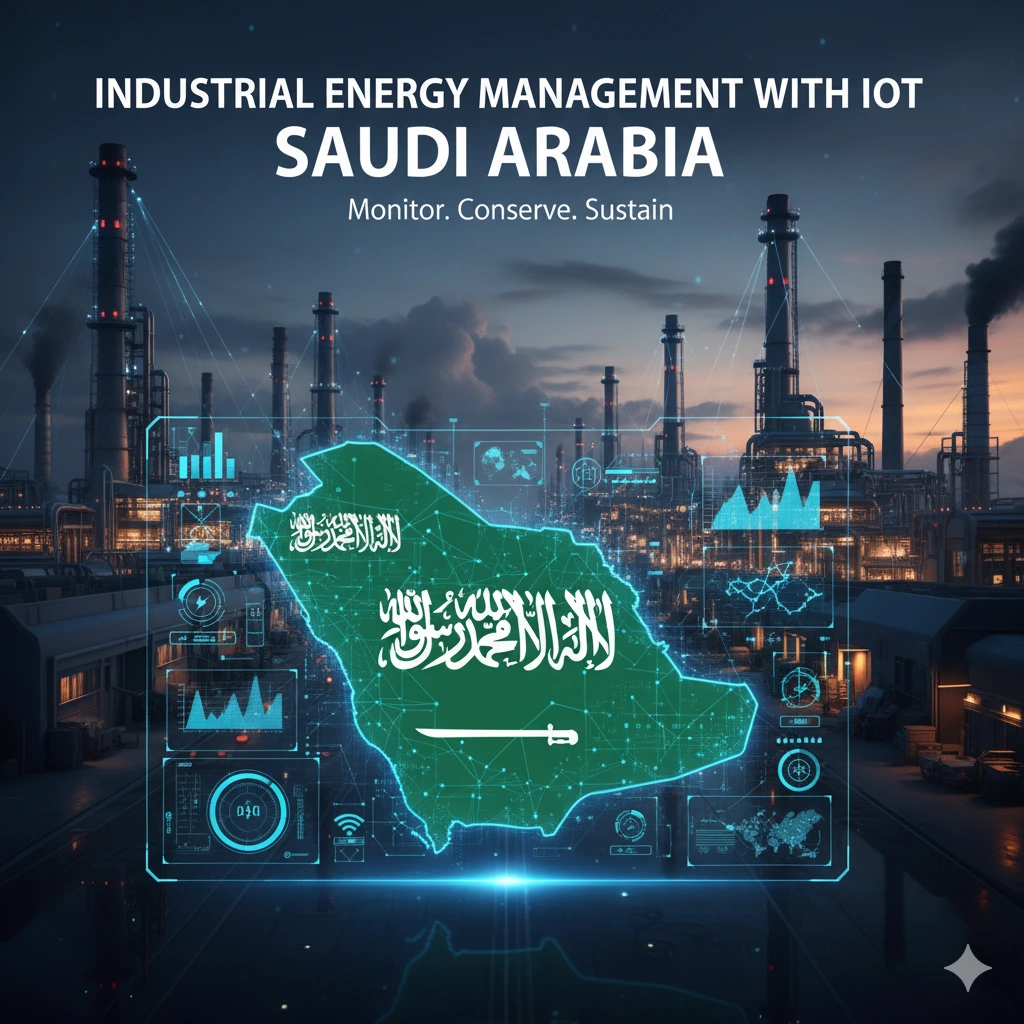
Smart Energy Management in Saudi Factories: Turning Power Consumption into a Competitive Advantage
Energy costs are no longer a fixed overhead for Saudi manufacturers. In energy intensive sectors such as metals, plastics, food processing, and chemicals, electricity consumption directly impacts margins. Factory managers in Dammam, Jubail, and Yanbu are under increasing pressure to reduce waste while maintaining production output.
Smart Energy Management, enabled by Industrial IoT, transforms electricity from an invisible cost into a measurable and optimizable resource. This approach aligns directly with Vision 2030 goals around efficiency, sustainability, and industrial competitiveness.
This article explains how Saudi factories are deploying smart energy systems and why this capability is becoming essential for modern operations.
Why Energy Visibility Is a Major Challenge
Many factories still rely on a single monthly electricity bill to understand energy usage.
This approach hides critical questions. Which production line consumes the most power. Which machines waste energy during idle time. Which shifts are the least efficient.
Without granular data, energy optimization becomes guesswork.
The Industrial IoT Approach to Energy Management
Smart Power Measurement
The foundation of any smart energy system is accurate measurement.
- Three phase energy meters for main feeders
- Sub meters for individual production lines
- Current transformers for machine level monitoring
These devices provide real time data on voltage, current, power factor, and energy consumption.
Connectivity and Protocols
Energy meters communicate using industrial protocols designed for reliability.
- Modbus RTU and Modbus TCP for energy data
- MQTT for publishing energy metrics to dashboards
- Ethernet and RS485 for stable plant connectivity
Industrial gateways aggregate data without impacting production systems.
Edge Processing and Dashboards
Edge devices process energy data locally.
Platforms based on Raspberry Pi or industrial PCs calculate key performance indicators such as energy per unit produced.
Visualization tools like Grafana display consumption trends by hour, shift, or production batch.
Linking Energy Management with OEE
Smart energy management becomes more powerful when combined with production data.
By correlating energy usage with OEE metrics, factories identify machines that consume excessive power while producing little output.
This insight drives targeted improvements rather than blanket cost cutting.
Saudi Industrial Scenario
Cement Plant in Eastern Province
A cement manufacturer operating near Dammam installed energy meters across its grinding and packaging lines.
The system revealed significant power consumption during idle periods between batches.
Operational changes reduced monthly electricity costs by over 9 percent without reducing output.
Supporting Sustainability and Compliance
Energy efficiency is increasingly linked to environmental reporting and sustainability goals.
Smart energy systems provide the data required for internal audits and regulatory reporting.
This supports national initiatives led by entities such as the Ministry of Industry and programs aligned with Vision 2030.
Implementation Challenges in Saudi Factories
High Temperature Environments
Energy meters and gateways must operate reliably in control panels exposed to extreme heat.
Legacy Electrical Infrastructure
Older panels require careful retrofitting to avoid downtime or safety risks.
Data Interpretation
Teams must be trained to translate energy data into operational decisions.
Energy Intelligence as a Strategic Asset
Smart energy management transforms electricity from a cost center into a source of insight.
For Saudi manufacturers, it improves margins, supports sustainability, and strengthens global competitiveness.
National digital and industrial programs highlighted by Vision 2030 and supported by data initiatives from SDAIA continue to accelerate adoption.
Deploy Smart Energy Monitoring with IIoT-Bay
Effective energy optimization starts with reliable measurement and industrial grade hardware.
Explore energy meters, gateways, and smart factory solutions at IIoT-Bay or book a consultation via IIoT-Bay Services.
Conclusion
Industrial IoT represents a strategic opportunity for Saudi factories to improve operational efficiency, reduce costs, and support Vision 2030 goals. By adopting modern technologies and best practices, industrial companies can achieve sustainable competitive advantage.
For personalized consultation on implementing Industrial IoT solutions in your facility, contact the IIoT-Bay team.