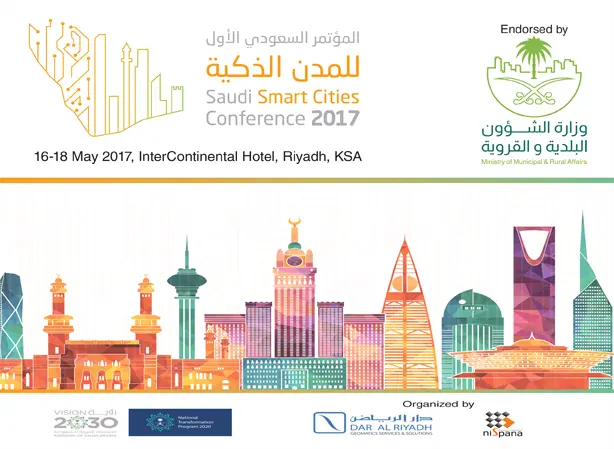
From Sand to Silicon: The Rise of Cognitive Cities in Saudi Arabia
Saudi Arabia is not just building cities; it is reimagining civilization. Under the banner of Vision 2030, the Kingdom is constructing the world's most advanced urban centers from the ground up. This is not merely about "Smart Cities"—a term that implies simple automation—but "Cognitive Cities" that think, learn, and predict.
At the core of this transformation lies the Industrial Internet of Things (IIoT). It is the digital nervous system connecting millions of assets—from traffic lights in Riyadh to water desalination grids in NEOM—creating a seamless interface between human residents and critical infrastructure.
The Shift: Why KSA Leads the Global Smart City Race
While European and American cities struggle to retrofit ancient infrastructure, Saudi Arabia has the "Greenfield Advantage." Projects like NEOM and The Red Sea are digital-native by design. The integration of IIoT allows for:
- Zero-Carbon Operations: Automated energy grids that balance solar and hydrogen loads in real-time.
- hyper-connectivity: 100% fiber and 5G/6G coverage as a standard utility, not a luxury.
- Data Sovereignty: Leveraging the Saudi Data & AI Authority (SDAIA) to ensure city data stays secure and local.
Key Technologies Powering Saudi Urban Centers
1. Urban IIoT & Sensors
Smart cities require millions of data points. IIoT sensors deployed across the city monitor air quality, waste bin levels, structural health of bridges, and water pipe leakage. This massive sensor mesh provides the raw data needed for decision-making.
2. Digital Twins
Riyadh is implementing massive Digital Twins—virtual replicas of the city. By feeding real-time IIoT data into these models, city planners can simulate traffic flows or emergency scenarios before they happen in the real world.
3. Edge Computing
In a cognitive city, latency is the enemy. Data from autonomous vehicles or security cameras is processed at the "Edge" (street-level gateways) rather than traveling to a distant cloud server, ensuring split-second response times.
Spotlight on Giga-Projects
NEOM: The Line & Oxagon
NEOM is the flagship of future living. Here, IIoT manages the invisible infrastructure. In The Line, logistics and utilities operate underground, autonomously managed by AI bots and sensors, leaving the surface for pedestrians and nature.
Riyadh: The Smart Capital
The Royal Commission for Riyadh City (RCRC) is utilizing smart traffic management systems to tackle congestion. IIoT-enabled traffic signals adjust timing dynamically based on real-time car density, reducing commute times by up to 30%.
The Red Sea Project
Focusing on regenerative tourism, this destination uses extensive environmental IoT sensors to monitor coral reef health and water salinity, ensuring that tourism development does not harm the delicate marine ecosystem.
Critical Applications of IIoT in KSA Cities
Smart Water Management
In a desert climate, water is more valuable than oil. Smart metering and acoustic leak detection sensors (IIoT) identify pipe bursts instantly, saving millions of cubic meters of desalinated water annually.
Intelligent Waste Management
Smart bins equipped with volume sensors notify waste collection trucks only when they are full. This "On-Demand" collection reduces fuel consumption by municipal fleets and optimizes route planning.
District Cooling Optimization
Air conditioning consumes 70% of Saudi Arabia's domestic power. IIoT controllers in district cooling plants optimize chiller performance based on weather forecasts and occupancy data, significantly cutting the carbon footprint.
Challenges: The Heat and the Hackers
Environmental Hardening
Standard "Smart Home" sensors cannot survive a Riyadh summer. KSA Smart Cities require ruggedized industrial hardware (IP67/IP68 rated) capable of withstanding 50°C+ heat and sandstorms. This is where specialized suppliers like IIoT-Bay play a crucial role.
Cybersecurity
A connected city is a target. The National Cybersecurity Authority (NCA) mandates strict protocols. IIoT devices must support advanced encryption and secure boot standards to prevent state-level attacks on critical infrastructure.
The Future: 2030 and Beyond
As we approach the 2030 deadline, the convergence of AI and IIoT will lead to:
- Autonomous Mobility: Self-driving pods becoming the primary mode of transport in designated zones.
- Proactive Governance: City services that address issues (like potholes or streetlights) before citizens even report them.
- Sustainable Living: Cities that generate more energy than they consume.
Conclusion: Building the Infrastructure of Tomorrow
Saudi Arabia is proving that a Smart City is not just about installing Wi-Fi in parks; it's about a fundamental restructuring of how urban environments operate. The Industrial IoT is the bedrock of this vision.
For contractors, system integrators, and city planners operating in the Kingdom, the mandate is clear: deploy robust, secure, and scalable IIoT solutions today to be ready for the cognitive future of tomorrow.
Powering KSA's Smart Infrastructure
Building the cities of the future requires hardware that can endure the present. Explore our range of ruggedized Industrial IoT sensors and gateways designed specifically for the Saudi market at IIoT-Bay.
Frequently Asked Questions
How does IIoT support Saudi Arabia's smart city initiatives?
Industrial IoT provides the sensor infrastructure, edge computing, and data analytics needed for smart cities. Projects like NEOM and Riyadh Smart City rely on IIoT for energy management, traffic optimization, and environmental monitoring.